
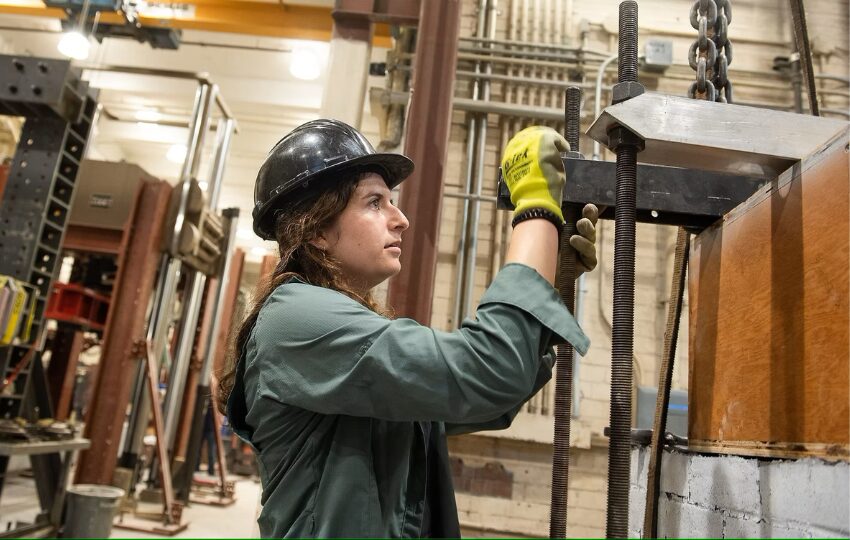
McGill struct-lab is a one-of-a-kind structural engineering research group with a unique mission: to assess old buildings to ensure they can be repaired, retrofitted and reused. The team is now working on the New Vic Project, which is transforming the 132-year-old former Royal Victoria Hospital into a cutting-edge teaching and learning space.
“You can find anything inside buildings like these,” said Daniele Malomo, Director of struct-lab and Assistant Professor in the Department of Civil Engineering. “This is a true discovery project, which is what makes it so exciting.”
Using highly specialized equipment and material samples from the New Vic site, struct-lab’s researchers will gather data that will help the project team make the best decisions possible.
“Our research will provide the New Vic team with the knowledge and confidence they need to leverage the strength of the building,” said Malomo. “It’s going to enable them to preserve more and spend less time, money and effort.”
The New Vic Project has been McGill’s most significant infrastructure project since the University’s inception over 200 years ago. The complex is scheduled to open in 2029.
“Our progress on the site cannot be overstated,” said Pierre Major, Executive Director of the New Vic Project. “Our team’s work is reshaping the Montreal skyline before our very eyes, reinventing the Royal Victoria Hospital site and transforming its original purpose to that of healing the planet.”
Materials testing
The struct-lab is the only lab of its kind in Canada. Its researchers have worked on several high-profile local projects, including at the 200-year-old fort de l’île Sainte-Hélène, the iconic Verdun Natatorium, the city’s historic churches and numerous collapsed buildings.
“What we do in our lab is very unique in Canada,” explained Malomo, who did much of his studies in his native Italy. “The North American way is often demolish-reconstruct, so people are not trained to restore and repair.”
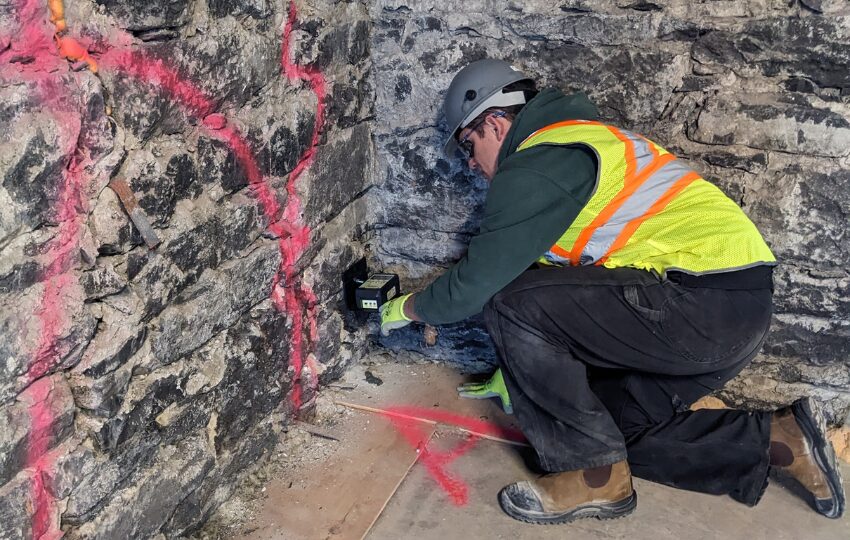
Malomo and his team used sensors to measure the vibrations of the New Vic, and will soon begin characterizing old mortars, stones and timber components to determine their strength and properties. Romaric Desbrousses and Ersilia Giordano, both post-doctoral researchers in the struct-lab, will co-lead the experimental investigations.
“I’m going to be taking care of most of the mechanical testing,” confirmed Desbrousses, who received his PhD in civil engineering from McGill last year. “That includes preparing the specimens, using our large-scale testing machines, and analyzing the data.”
Thus far, the preliminary results have been positive: the timber, mortar and stones are all composed of high-quality materials and appear to be in very good condition.
Yet surprises are inevitable. Malomo and his team recently found a 1939 newspaper hidden inside the Royal Vic’s walls, a common practice among masons to mark their presence and work. And Canada’s National Building code was first published in 1941, which means anything built before that time did not require an engineer’s approval and was done by trade workers using a mix of skills.
“It was all about improvisation, which makes the life of the engineers a bit more difficult,” said Malomo. “That’s why we’re here.”

A site for sustainability
The struct-lab is part of a “dream team” of architects, engineers and heritage consultants assembled to complete the building, with Malomo singling out Ines Sijercic and Francis Trottier of engineering firm CIMA+, as well as Jan Kubanek and Ulisses Munarim from ERA Architects, for special mention.
Together they’ll ensure the site of the largest single sustainability and public policy research facility in the world will itself be sustainable.
“The more we reuse, the less we have to dispose of and the smaller the carbon footprint will be,” explained Malomo. “And it’s a giant project, so there are a lot of materials.”
It’s a challenge, but one Malomo and his teams of researchers are excited to take on.
“The Royal Vic is such a Montreal landmark,” said Malomo. “We feel very privileged to be able to contribute.”
