Staff at McGill Libraries are going above and beyond in their efforts to incorporate sustainability into their day-to-day operations.
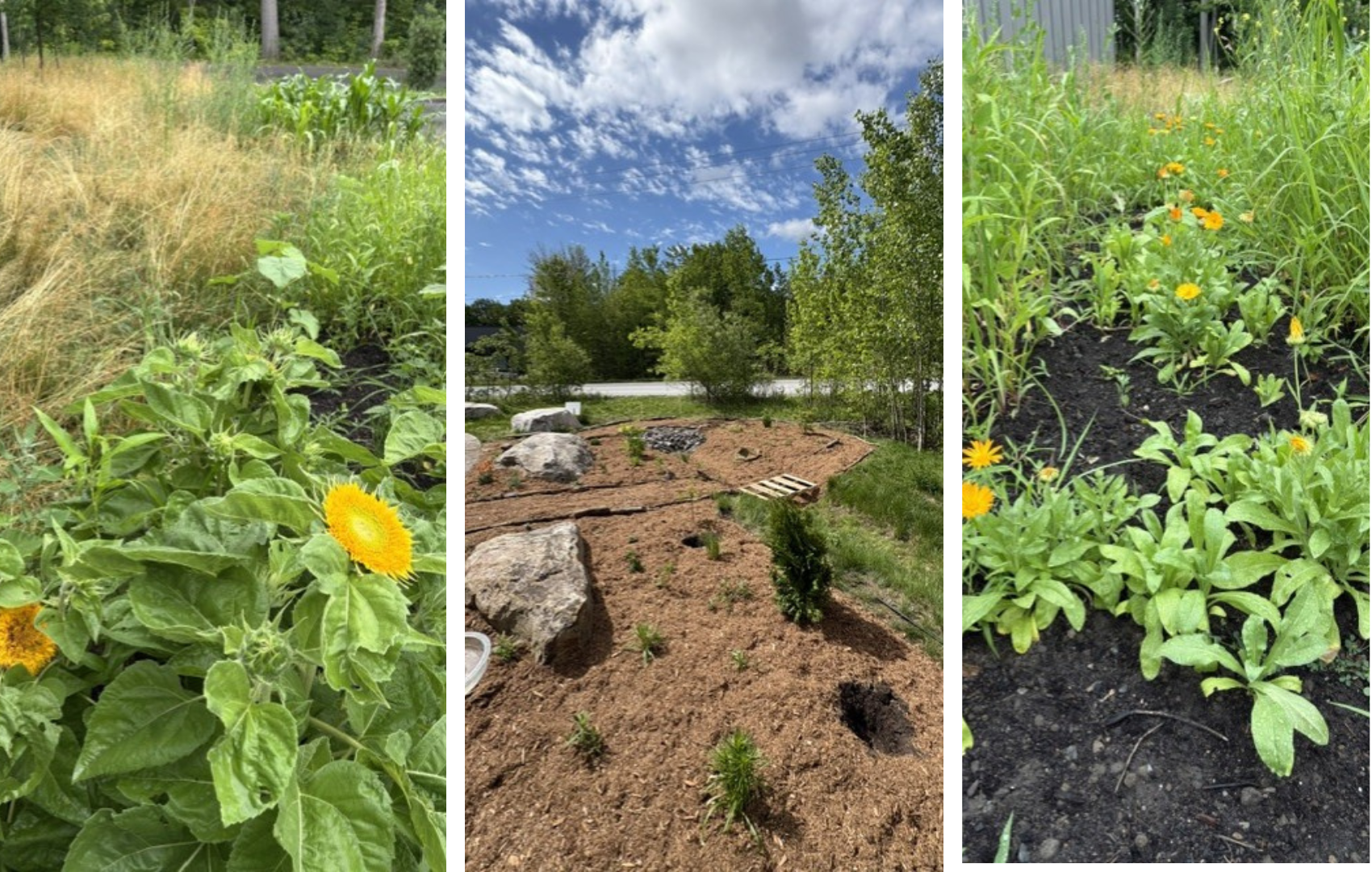
The McGill University Collections Centre, which already boasted LEED gold certification, has transformed the surrounding greenspace into a biodiversity garden featuring a butterfly patch and a flowering lawn.
Meanwhile, McGill Libraries is on track to become one of the first Canadian research libraries to complete a specialized international certification program.
Additional sustainability measures include obtaining McGill’s Sustainable Workplace Certification for all library locations and designating multiple libraries as cooling centres during heatwaves.
“What stands out to me is the enthusiasm and commitment of our staff,” said Guylaine Beaudry, Trenholme Dean of Libraries. “Across our libraries, people are finding practical and creative ways to make sustainability part of what we do every day.”
Bookworms and green thumbs
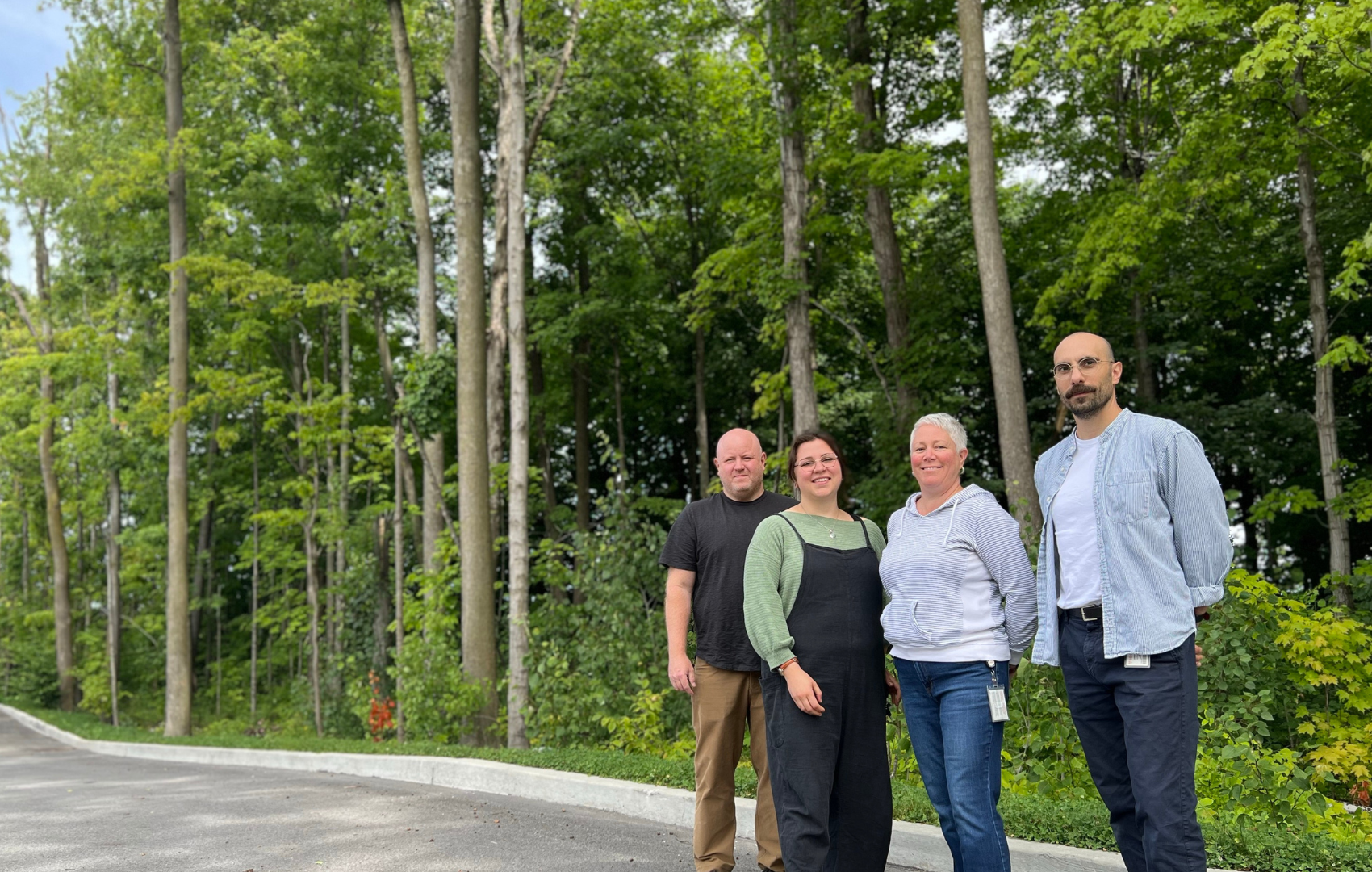
The McGill University Collections Centre is located in Salaberry-de-Valleyfield, where four staff members oversee 2.4 million items. The Centre offers few amenities and the surrounding grounds were undeveloped.
“We had no landscaping here whatsoever, other than mowing twice a year” said Anne-Marie Fournier, Maintenance and Collections Centre Supervisor. “Sometimes we’d see deer and wild turkeys, but when it’s mowed, they’d stop coming. So we started to think of how we could let wildlife reclaim the space while sharing it with us.”
Staff brainstorming sessions resulted in some big ideas – namely, the creation of five distinct garden spaces that made the grounds more dynamic, diverse and ecologically meaningful: a bird oasis, a butterfly patch, a flowering meadow, raised garden beds and a serenity space for employees.
“The goal was to create a series of small ecosystems that work together and contribute to the biodiversity of the Centre’s grounds,” said Fournier.
The team applied and received over $8,000 in funding from McGill’s Sustainability Projects Fund – just one of more than 400 McGill projects that have been funded. The work was completed in early July, and the staff couldn’t be happier with the results.
“Everyone is genuinely excited,” said Fournier. “The project has given us a renewed sense of pride and energy onsite.”
Vegetation consists mainly of pollinator plants and native flowers, many of which were sourced from the Macdonald Campus Seed Library. Wildlife has returned to the area with over 50 species sightings documented on the iNaturalist app; they range from cardinals to clover.
“This project aligns seamlessly with McGill’s sustainability goals and the Libraries’ commitment to fostering inclusive, supportive and forward-thinking workspaces,” said Beaudry. “I commend the team for their vision and initiative.”
While staff had committed to maintaining the grounds, the long-term goal is to let the gardens evolve over time and adapt to the surrounding conditions.
Sustainability warriors
At the same time, Associate Dean Jenn Riley has been overseeing McGill Libraries’ efforts to complete the Sustainable Libraries Certification Program, an international initiative to strengthen libraries’ commitment to environmental stewardship, economic feasibility and social equity.
McGill is the first member of the Canadian Association of Research Libraries to start the process. The hope is to be the first to complete the 110-item checklist before the end of 2026.
The multiyear program “is a huge challenge,” confirmed Riley.
“We are already a sustainable campus,” she said, citing McGill’s ninth-place finish in the QS sustainability rankings. “We’re doing so much we could almost fill out the criteria based on what’s already been done. But that would be simply maintaining the status quo, and we entered this program to get better and to challenge ourselves to do more.”
New initiatives resulting from the program include a take-a-tote-bag-leave-a-tote-bag exchange in the Marvin Duchow Music Library and a Climate Action Reading Group for students, to be piloted in the fall.
In addition, McGill Libraries have made it their mission for all their locations to obtain McGill’s sustainable workplace certification; 14 Libraries units – including nine library locations and the Collections Centre – have earned at minimum bronze certification. The Collections Centre and the Islamic Studies Library are platinum, the highest possible rating.
“We want to become a more sustainable academic library system that uses good practices,” said Riley. “We want to push the envelope a bit.”