
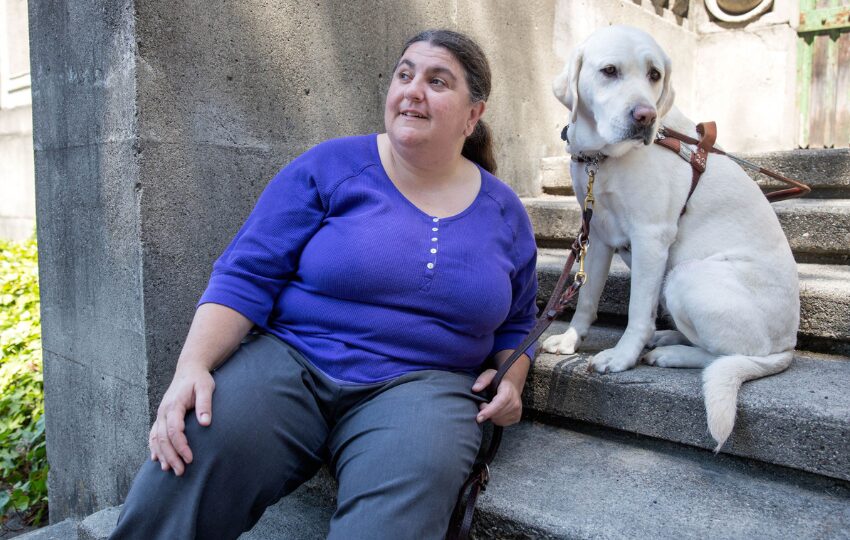
Lucy Greco knows just how life-changing technology can be. Blind since birth, she can vividly remember the challenges she faced before advancements such as GPS, spellcheck and the web changed her life for the better.
“It was painful,” said Greco, who recalls the excruciating hours she spent typing up junior high essays on a braille machine and typewriter, as well as her dashed dreams of pursuing a career in physical therapy. “I’m so envious of students today who can do more with their disabilities then I could.”
Yet Greco was a trailblazer, earning a literature degree and a Paralympic bronze medal before embarking on a 20-year career at the University of California, Berkeley, where she served as a subject-matter expert on digital accessibility within higher education.
Now Greco has been invited by Digital Communications and the Equity Team to speak to McGill staff whose work affects accessibility in digital spaces, to ensure McGill students, regardless of which disability they may have, are given access to the resources they need. About 4600 students register with McGill’s Student Accessibility and Achievement, a number that likely falls short of representing how many may need or benefit from accessibility measures.
“Welcoming Lucy to McGill is a true honour,” said Catherine Roy, Accessibility Advisor on the Equity team. “Her decades of leadership in digital accessibility have not only advanced the field but have inspired countless others to carry the work forward. We’re grateful for the chance to learn from her experience and to engage in thoughtful conversation about what comes next.”
Accessibility 101
Some may believe accessible digital spaces must be simple and boring, but that’s simply not the case, Greco said: “An accessible website is a beautiful website, and when it’s accessible it works for everyone.”
However, universities can present particular challenges. In addition to funding cuts, “some people working on websites aren’t trained web designers or developers, so they don’t necessarily understand best practices or how to implement them.”
Yet Greco said higher education institutions are uniquely qualified to overcome these challenges.
“Universities have the benefit of having really committed and smart people who want to solve problems. They were the first to explore accessibility maps and teach architects about accessible building design.”
Greco is eager to represent her community, bring awareness to digital accessibility and advocate for systemic change on behalf of those with disabilities. She said she’s hopeful those who attend the McGill event will come away with a better understanding of how powerful inclusivity can be.
In the meantime, Greco remains a trailblazer: she’s now a budding YouTuber, sharing videos on cooking tips and home appliance reviews for the blind.
“We’re so pleased to have this opportunity to learn from Lucy’s experience and expertise,” said Joyce Peralta, Manager, Digital Communications. “I hope this event will inspire and empower our community to continue building and advocating for inclusive technology. By striving to make our sites accessible and welcoming to all, we can foster a more inclusive environment.”
Lucy Greco Aug. 4 visit to McGill can be viewed on YouTube. For more on digital accessibility at McGill, visit Web Services’ supporting resources and articles.