
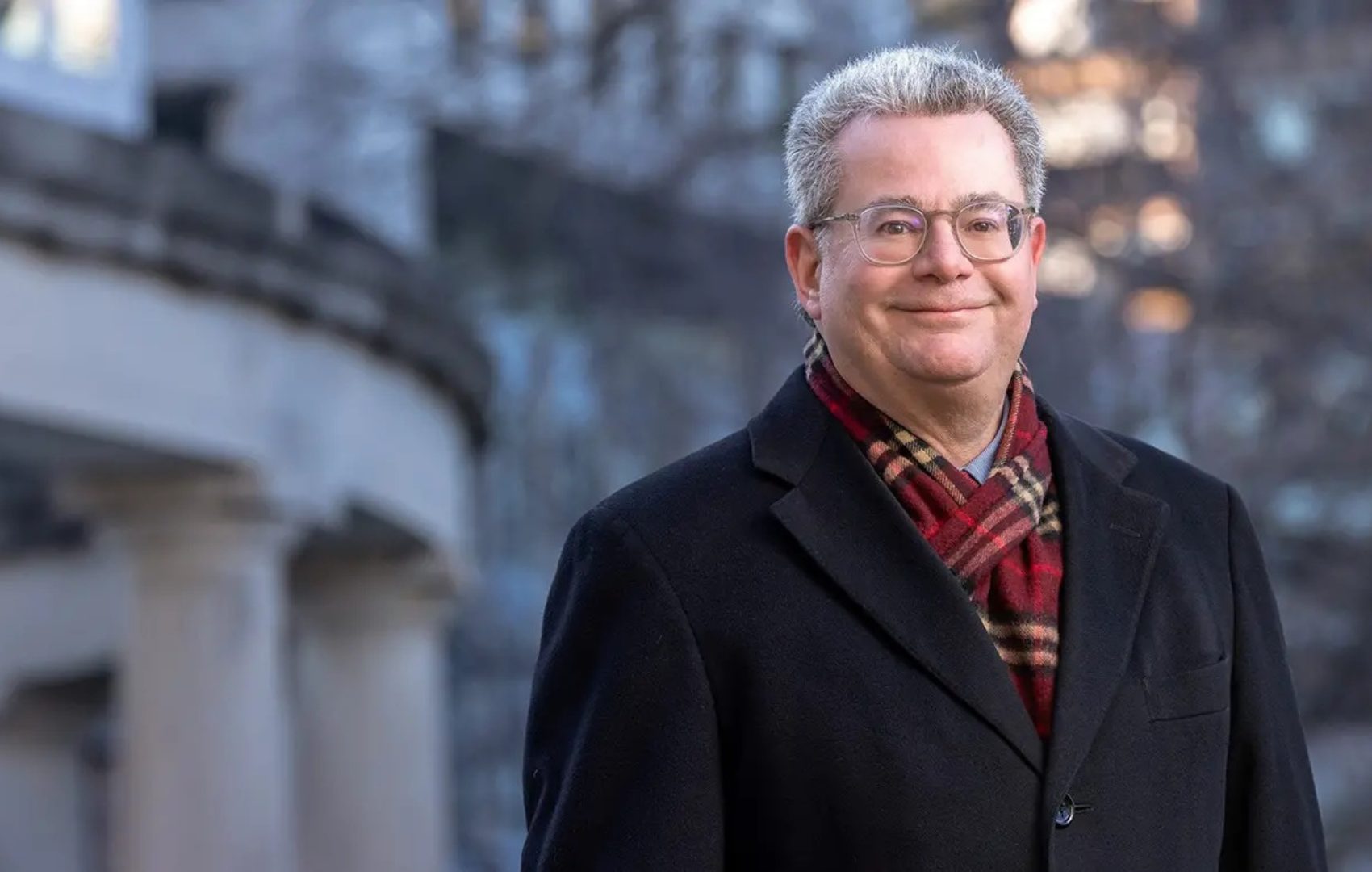
When Christopher Manfredi began his tenure as McGill’s Provost and Vice-President (Academic) in 2015, he expected the unexpected.
“Even so, the sheer variety and diversity of issues that come through the Provost’s office was a surprise,” he said.
“Almost everything, whether it’s related to academics or administration, ends up in the Provost’s office in one way or another, and I very much enjoyed the intellectual stimulation of trying to solve those puzzles.”
Manfredi’s time in office has indeed been eventful. Notable challenges include getting the go-ahead to develop McGill’s future Sustainability Park and grappling with the return to in-person teaching after the COVID-19 pandemic.
Although many things have evolved over the past decade, “McGill has always had superb students, as well as dedicated leadership, both internally within the institution and from our external community. They’ve always supported us very strongly, and that hasn’t changed,” he said.
Advancing excellence
McGill’s senior leadership has faced challenges in recent years – including government policy changes, financial constraints and global conflicts – but Manfredi is proud of what has been accomplished during his tenure.
One of his objectives was to establish a School of Public Policy – a goal realized in 2017, thanks to support from his predecessor, Anthony Masi, and the Max Bell Foundation.
Another priority was to champion Indigenous scholarship and make McGill the leading university east of the Manitoba/Ontario border for Indigenous education.
“That’s a longer, more complex process,” said Manfredi, “but I’d say we’re well on our way to achieving it.”
The Provost’s Task Force on Indigenous Studies and Indigenous Education was established in 2017, outlining McGill’s 52 Calls to Action for Truth and Reconciliation; Celeste Pedri-Spade was appointed Associate Provost (Indigenous Initiatives) in 2022, and a new Indigenous tuition initiative took effect in 2024.
“We’re not yet at the number of Indigenous students I set out for us to have, so that’s still a challenge,” admitted Manfredi. “But McGill has moved quite a bit in the context of Truth and Reconciliation.”
He also highlighted McGill’s equity, diversity and inclusion (EDI) work, which included delivering the University’s first EDI Plan and achieving gender parity among McGill’s deans.
“I’m proud of what we’ve done and proud of the approach we’ve taken. We looked at EDI not as a box we had to check off, but as something that could help us become a better university and give us access to talent we might otherwise be missing. We never kept our eyes off excellence as the ultimate criterion and we’ve been able to advance the diversity of the institution, in all senses, without compromising on excellence. I’m pretty proud of that.”
Future opportunities
There are initiatives Manfredi said he wishes he could have pushed further. Chief among them are the Fiat Lux Library project and building a research pavilion at Macdonald Campus. Financial constraints made it impossible to move those projects forward.
He also said he wishes he could have continued teaching, but the demands of the Provost job made that untenable.
“Being a teacher is a very important part of what I consider myself to be as a professor, and meeting students in the classroom gave me a much better understanding of what was on their minds.”
After Angela Campbell becomes Provost Feb. 1, Manfredi said he will take the time to retool his academic credentials before returning to his research. He said is not retiring and has no plan to leave McGill.
“Serving in a senior role allowed me to give back to an institution that made my career so rewarding,” he said. “I’m grateful to have the opportunity to make that contribution, and grateful to those who mentored me, supported me and worked with me as we’ve undertaken different projects.”
He highlighted the two Presidents he served, Suzanne Fortier and Deep Saini, as well as his vice-presidential colleagues, deans and staff members.
“I have every confidence in Angela Campbell and her team,” he said. “The people who work in the James Building, whether they’re senior administrators or support those senior administrators, are highly competent and deeply dedicated to the university.”