
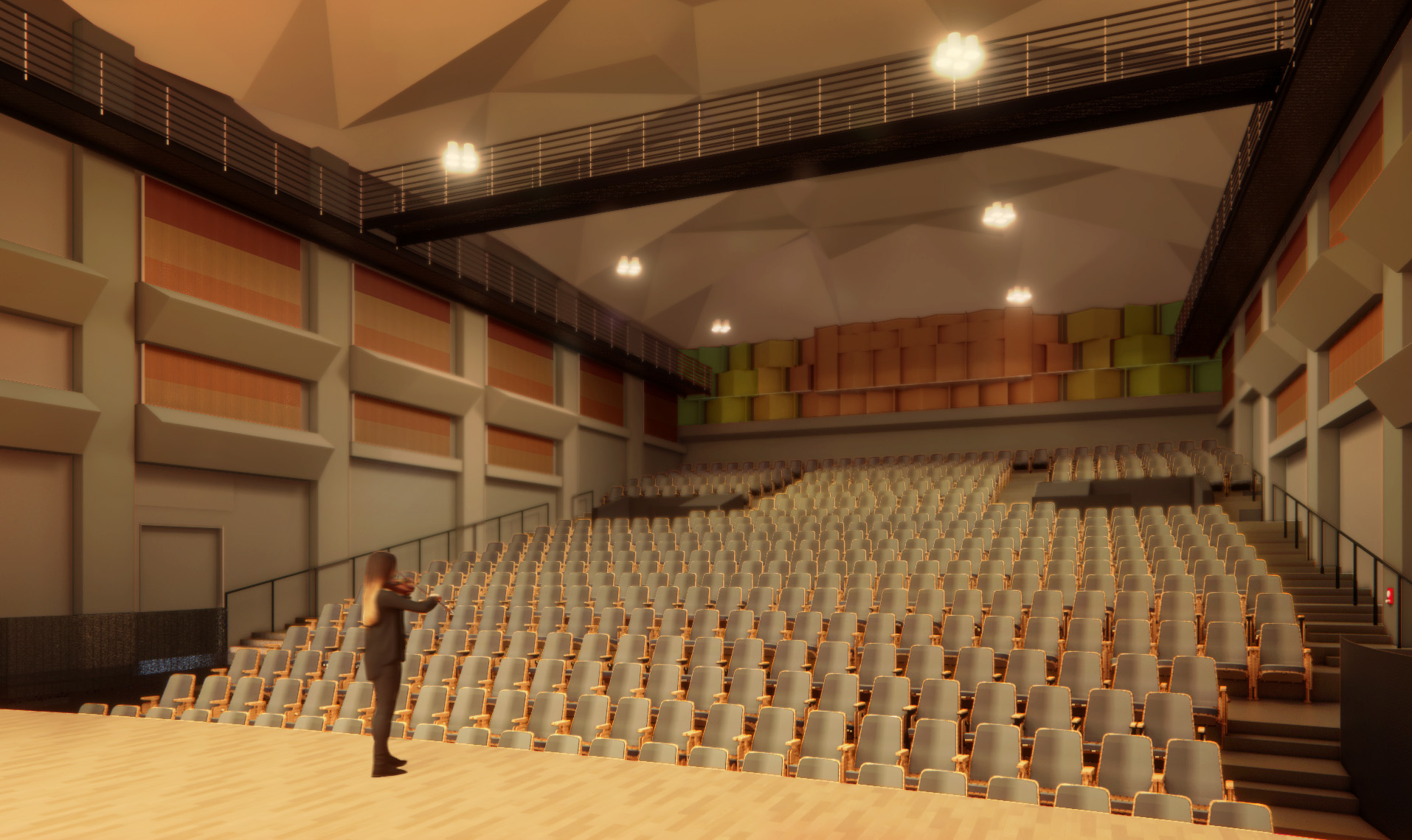
Pollack Concert Hall, the Schulich School of Music’s largest performance venue, will officially reopen Sept. 19 after a multimillion-dollar two-year renovation.
Located within the Strathcona Music Building, the 600-seat venue is renowned for its acoustics. When it reopens, it will also boast a renovated lobby and lounge, new seats, redesigned lighting and numerous accessibility modifications for both artists and audience members.
“Building on Pollack Concert Hall’s unique sense of musical intimacy, these renovations reflect our commitment to making the hall more welcoming and accessible,” said Sean Ferguson, Dean of the Schulich School of Music.
“By enhancing both the audience and backstage spaces, we’re ensuring that all students, faculty, guest artists and concertgoers can fully experience everything Pollack Hall has to offer. We look forward to welcoming even more people to the Schulich School of Music through this remarkable space.”
Improved accessibility and inclusivity
While Strathcona Music Building’s heritage status presents constraints when it comes to enhancing accessibility, “I was genuinely impressed by what I saw at Pollack Concert Hall,” said Catherine Roy, McGill’s Accessibility Advisor, who recently toured the facility.
“You can see accessibility was taken seriously; not just as a technical requirement, but in creating a space where people with disabilities can participate fully, whether they’re in the audience or on the stage. There has clearly been a lot of care put into thinking about how they will actually experience the Hall.”
The venue’s new accessibility features include:
– A new elevator providing access to the Hall
– Additional seating space in the fifth row for patrons with reduced mobility
– Assistive listening technology for patrons with hearing loss
– A new backstage elevator for performers connecting the stage and dressing rooms
– Gender-inclusive dressing rooms
– Accessible and gender-inclusive washrooms
“Making the stage itself fully accessible is particularly significant,” said Roy. “We still see far too many performance spaces where accessibility is considered for audience members but not necessarily for performers. Here, accessibility extends to the stage, dressing rooms, rehearsal spaces, washrooms and showers, which is really encouraging to see.
“Another aspect that really stood out was the accessible seating. People using wheelchairs or other mobility devices aren’t simply accommodated somewhere off to the side with a less desirable view – the spaces are really integrated into the seating plan, with excellent sightlines. That makes a huge difference in terms of feeling like you’re actually part of the audience.
“It’s a really good example of what can be accomplished when accessibility is considered as an integral part of a renovation rather than something that is added on afterward.”
A cultural landmark
The Hall was inaugurated in 1975 and named after philanthropist Maurice Pollack; the renovation is its first in over 20 years.
“This project has modernized a beloved cultural landmark while respecting its rich history,” said Sophie Bolduc, Associate Vice-President, Facilities Management and Ancillary Services.
“By improving accessibility, upgrading performance and audience spaces and creating a more welcoming environment for all, we have helped ensure Pollack Concert Hall continues to inspire and connect people through music. Seeing the renewed Pollack Hall open its doors is an exciting moment for the entire McGill community, and we are proud to have contributed to a space that will serve both the McGill community and the broader Montreal public for many years to come.”