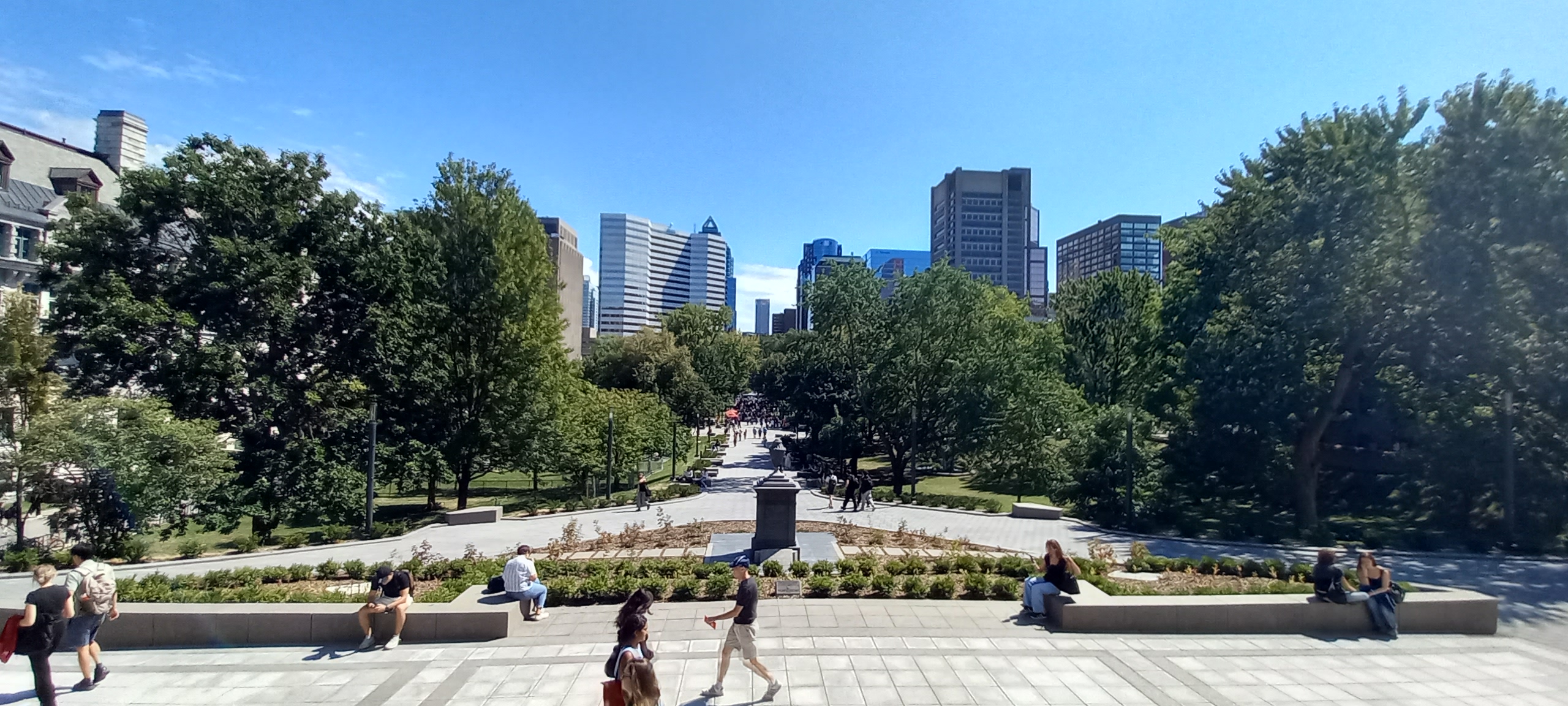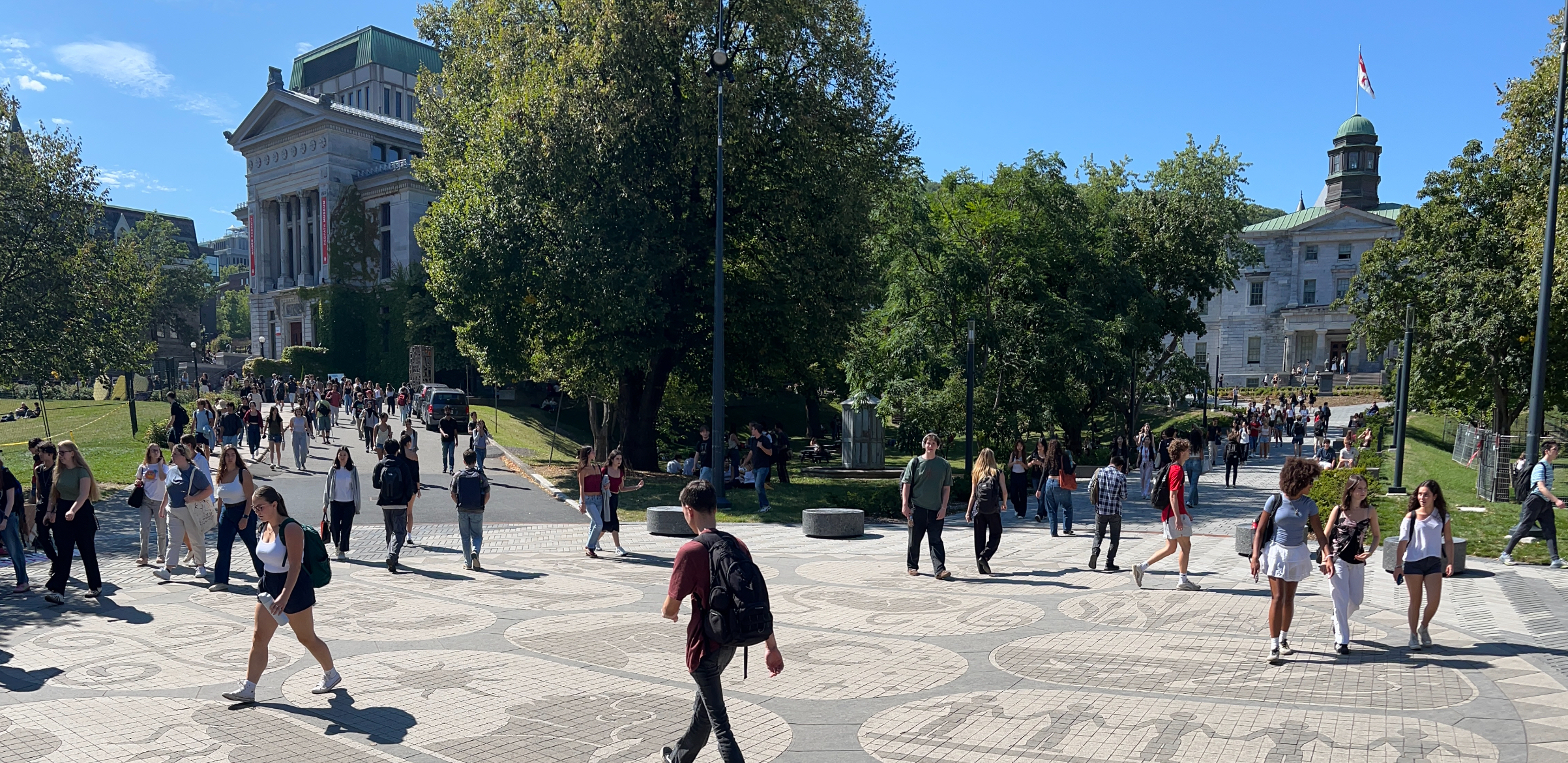
After more than a year of construction, McGill has completed the redevelopment of Upper Main Road, transforming the artery on the downtown campus into a flexible and welcoming public space for the entire community. The revitalized roadway has reopened to the public, over two months ahead of schedule.
Led by McGill’s Facilities Management and Ancillary Services (FMAS), the project set out to modernize aging infrastructure while creating a pedestrian-first environment that enhances the landscape, integrates new urban furniture and is designed for long-term durability.
“The reopening of Upper Main Road marks a significant step in reimagining the downtown campus as a safer, more accessible and more sustainable place for all,” said Sophie Bolduc, Interim Associate Vice-President, FMAS. “This project is the result of years of planning, collaboration and consultation with the McGill and Montreal communities.”
Honouring Indigenous presence
At the heart of the redevelopment is the creation of Tsi Non:we Onkwatonhnhets – “The Place Where Our Life Force Emerges from the Earth” – a meeting place at the location of the former Y-Intersection, based on a concept by Indigenous designer Philip White Cree. The space features a central granite turtle shell embedded with 13 artworks by Oneida artist Alanah Jewell, representing the Haudenosaunee Thanksgiving Address. Surrounding benches engraved with species indigenous to Montreal, or Kawennote Tiohtià:ke, along with four new flagpoles, which can be used to raise Indigenous flags and others chosen by the McGill community.
Building for the future of McGill
Sustainability was a cornerstone of the project, which is targeting SITES v2 certification, a leading standard in landscape sustainability. Efforts include:
- Advanced rainwater management,
- Vegetation enhancements through the use of native species,
- A 20-per-cent reduction in paved areas to reduce heat-island effects,
- Selection of high-reflectivity, low-carbon materials to reduce the project’s environmental footprint and
- Planned diversion of a high percentage of construction waste from landfill.
Accessibility has been improved – including a slope reduction near the McCall MacBain Arts Building – new lighting has been installed and event infrastructure is in place. Permanent furniture and signage will be installed soon.
A collaborative effort
The project was designed by McGill Design Services in collaboration with the Office of Indigenous Initiatives, external engineers, specialists from multiple fields, as well as Indigenous consultants and artists.
“This project demonstrates McGill’s ability to harmonize modern infrastructure with cultural recognition, sustainability and respect for our built heritage” said Emmanuelle Lapointe, Director Design Services, FMAS. “We’re proud to welcome the McGill and Montreal communities back to a revitalized space that will honour the past while serving future generations.”