
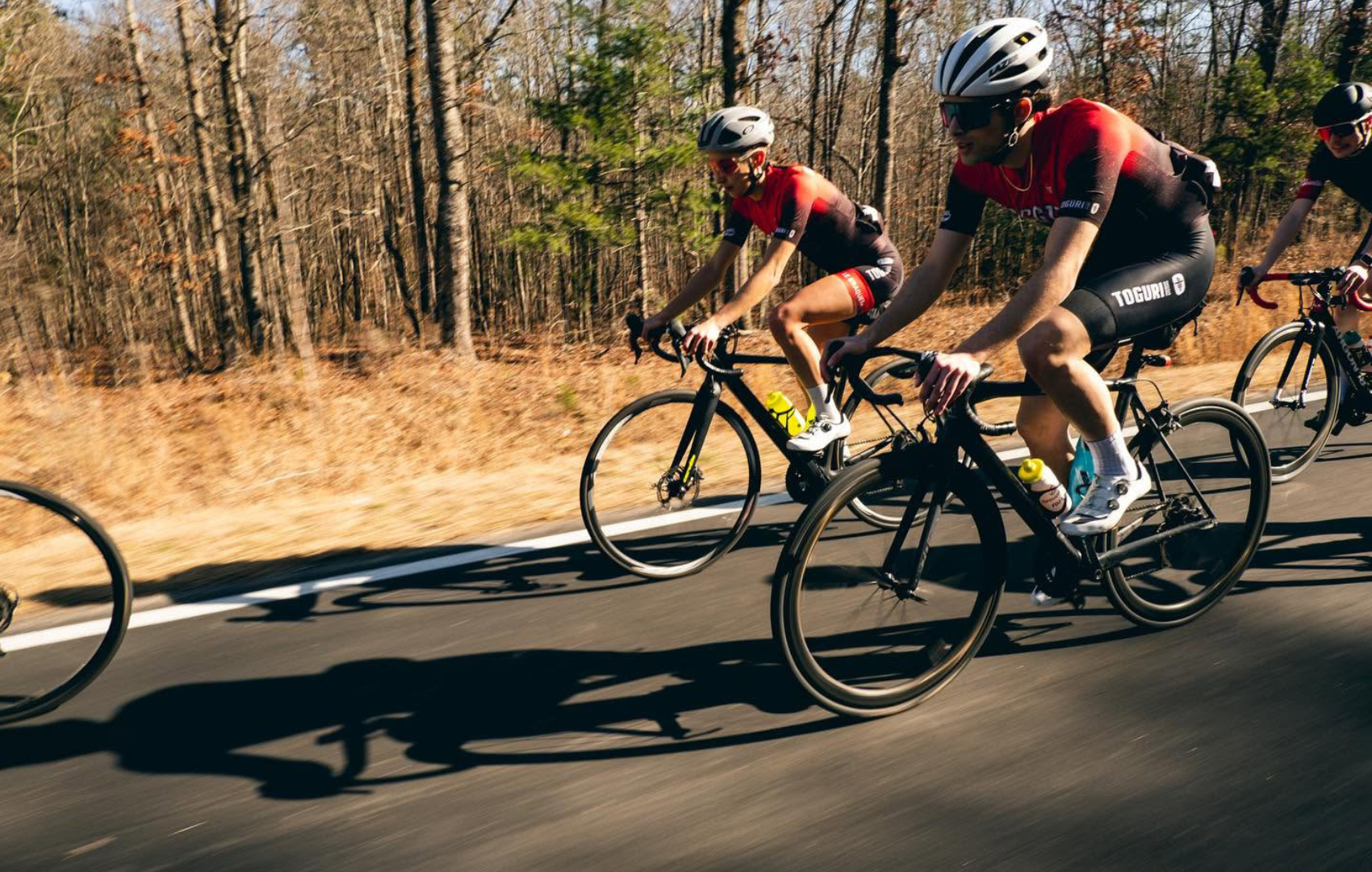
“I think having an event like this right on our doorstep is a wonderful opportunity for the McGill community,” said Professor Rowan Barrett, referring to the UCI 2026 Road World Championships, Sept. 20-27.
The biggest sporting event in Montreal since the 1976 Olympics, it’s expected to bring over 500,000 cycling fans to the city and feature 1,000 athletes from over 100 countries. Part of the racecourse is on Mount Royal, in the university’s backyard.
“Seeing some of the best cyclists in the world racing through Montreal can spark enthusiasm for cycling as a sport, and I hope it also encourages people to think more broadly about bikes as part of everyday life,” he said.
For Barrett, Canada Research Chair of Biodiversity Science and a professor in the Department of Biology, cycling is the preferred mode of transportation. He cycles everywhere and logs his stats on Strava, a mobile app and website that’s popular with both amateur and professional athletes. He has attained local-legend status not only for competing for Strava records around the world, but also for frequently outpacing professionals on the app.
“Personally, I’m excited to see world-class racing on roads I know so well,” said Barrett. “It’s really special to watch the best riders in the world race through your own city, particularly on the same climbs and streets that many of us ride regularly. If an event like this inspires more students and staff to get on a bike, whether for a recreational ride or their commute to campus, that would be a really positive legacy of the championships.”
How McGillians are shaping the sport
This is the second time Montreal is hosting the championships and the first time McGill University, along with Université de Montréal, is serving as an institutional partner.
McGill’s involvement is not only on account of the races’ proximity to the downtown campus. Since the first Montreal UCI race in 1974, members of the McGill community have made important contributions to the cycling world, and continue to do so.
The research conducted at the world-renowned SASSI and its Cycling Lab, for example, has helped advance performance in the sport.
Then, there is Cervélo, which began as a passion project for Phil White (B.Eng. ‘96) and a friend and eventually grew to become an internationally recognized Canadian bike manufacturing company. Cervélo’s bikes have become ubiquitous at global racing events and are recognized as some of the world’s fastest.
McGill students and alumni have also created multiple inclusive cycling clubs over the years. For example, the Flat Bike Collective, McGill Outdoors Club and New2Wheels were created by students for students to help peers meet new people and become familiar with the city and bike safety.
McGill Cycling – a competitive team that has become a fixture on the Montreal bike scene – offers training rides that welcome cyclists of all levels from across the city. The club has been representing the University at races for the past 30 years, travelling around Quebec, Ontario and the northeastern United States to compete.
The event also offers an opportunity for McGill to highlight its connections to cycling. Members of McGill Cycling and other student volunteers will be staffing a booth in the fans’ village in Jeanne Mance Park, handing out merch and raising awareness of the University more broadly.