
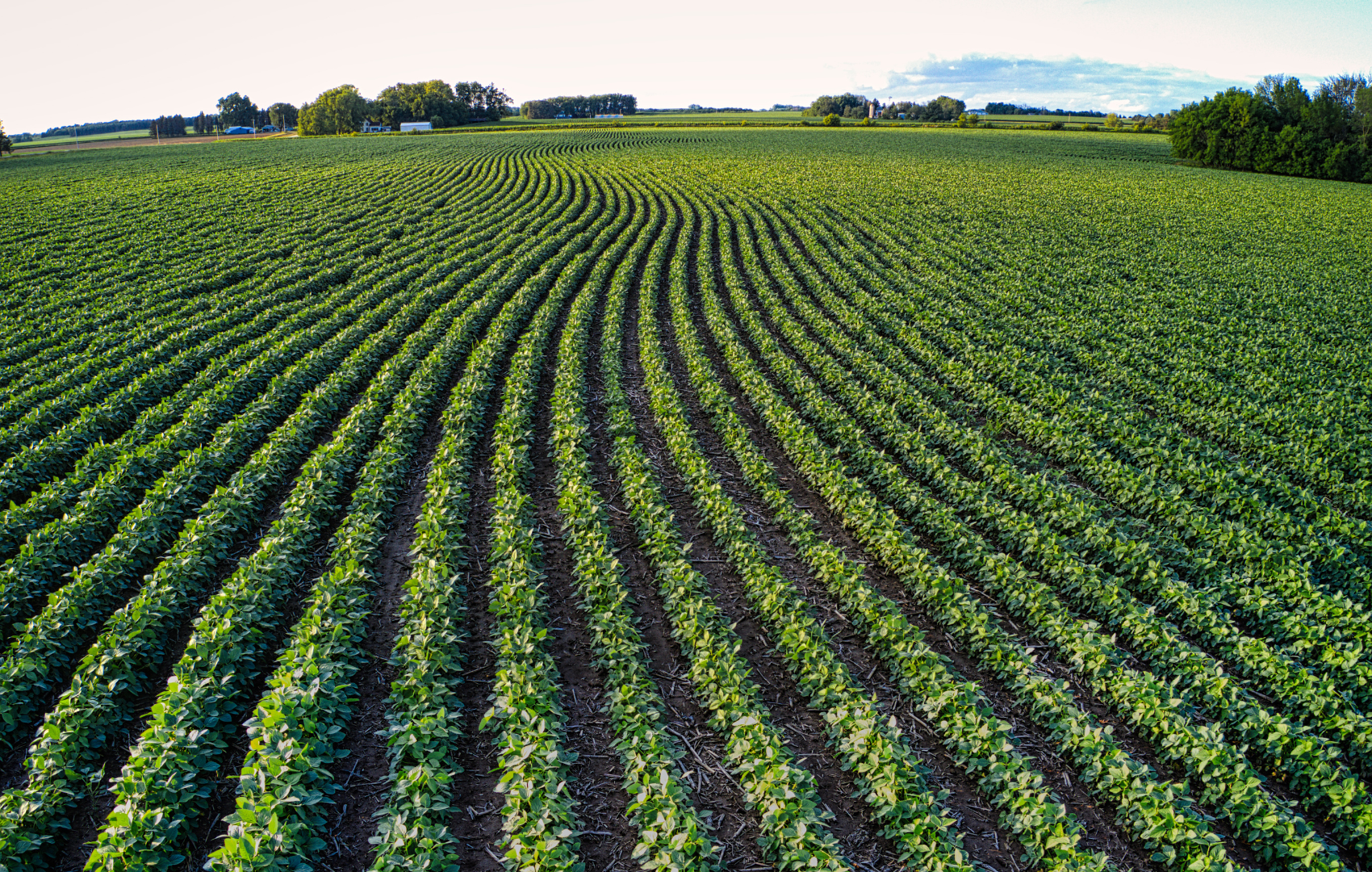
If Quebec agronomists had access to several years of research on local farmland, they could help farmers optimize yields, reduce waste, lower costs and improve efficiency.
To make that dream a reality, a team at McGill’s Macdonald Campus created AgPrécision, a network that will link agricultural experiments on farms across Quebec and share the results with regional agronomists.
Viacheslav Adamchuk, Professor and Chair of McGill’s Department of Bioresource Engineering on Macdonald Campus, launched a project this summer sponsored by the Quebec agriculture ministry (MAPAQ) to engage over 200 trials over the next three years.
“The AgPrécision platform has been tailored to Quebec agronomists,” said Adamchuk. “Everything has been designed to help them save time and make better decisions.”
His team is actively recruiting agronomists throughout the province, with plans to make the AgPrécision project self-sustaining by 2029.
A fix for local farmers
The concept of a regional research network is not new; similar initiatives already exist in other provinces and states.
Adamchuk spent a decade at the University of Nebraska-Lincoln contributing to the Nebraska Extension, a public educational network that shares the university’s research with local agricultural producers.
“In Nebraska, reports on past trials are released every few months,” said Adamchuk. “Farmers and agronomists can view these reports to see what experiments were done, what the conclusions were and how it compares with other research.”
AgPrécision’s French-language version is tailored to Quebec producers.
AgPrécision will use precision agriculture techniques that employ modern tools like GPS systems and soil sensors to generate big data and manage the precise application of inputs like seed, fertilizer and other chemicals.
Experiments will be conducted in five of Quebec’s major agricultural regions – Lanaudière, Laurentides, Centre-du-Québec, Montérégie and Chaudière-Appalaches – and research will focus on optimizing soil nutrients, cover crops, new agricultural products and other elements of cropping systems. The resulting research will serve as a local scientific database tailored to each agro-climatic region.
For example, “near the St. Lawrence River, the soil is quite variable,” said Adamchuk. “When you test different treatments, such as fertilizers and cultivars, are your results due to the soil or the treatments? You can’t just compare one year to another; you need to use statistical methods and compare side-by-side to see whether the changes are significant or not.”
AgPrécision’s participating agronomists work with soybeans, corn and forage crops, all of which have tight profit margins.
“It’s difficult to make decisions in such a critical economy,” said Adamchuk. With the AgPrécision project, “producers now have the tools and methodology to do better.”